


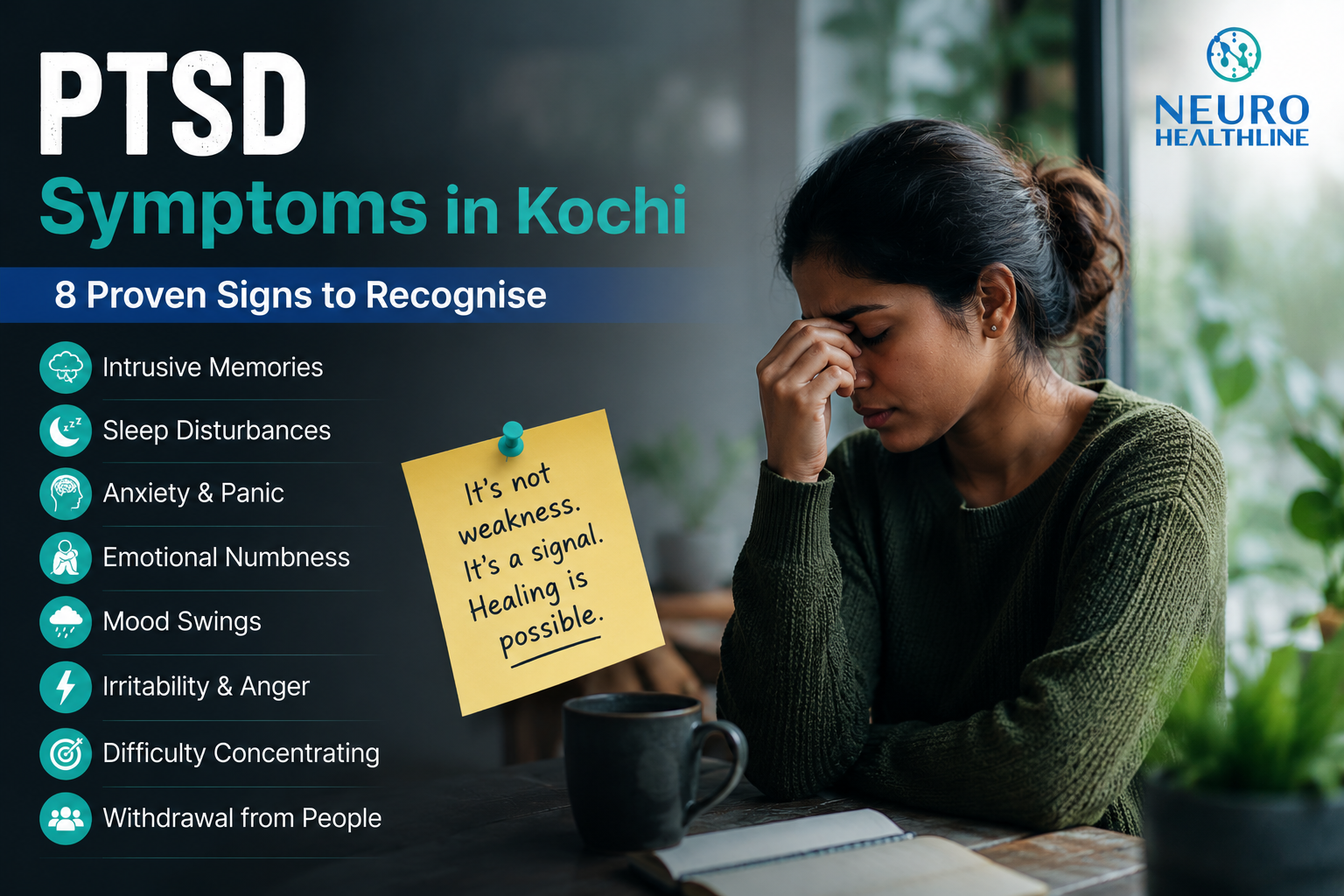
Recognising PTSD symptoms in Kochi early can make a significant difference in how quickly and effectively recovery happens. Post-Traumatic Stress Disorder doesn’t always look the way it’s portrayed in media — it isn’t limited to combat veterans or survivors of catastrophic events. PTSD can develop after car accidents, medical emergencies, domestic abuse, workplace incidents, or any experience that overwhelms a person’s ability to cope safely. Understanding the full range of PTSD symptoms in Kochi can help you or someone you care about recognise what’s happening and take the first step toward effective treatment.
What Is PTSD? A Brief Overview
PTSD develops when the brain’s natural threat-response system remains activated long after a traumatic event has passed. Instead of processing and integrating the experience, the nervous system continues to behave as though danger is still present. This is why PTSD symptoms often persist for months or years if left unaddressed, and why effective treatment must work directly with the nervous system rather than relying on willpower or time alone to resolve symptoms.
8 Proven PTSD Symptoms in Kochi to Recognise
1. Intrusive Memories or Flashbacks
One of the most recognisable PTSD symptoms is the experience of intrusive memories, vivid flashbacks, or distressing dreams related to the traumatic event, often occurring without warning and feeling disturbingly real.
2. Hypervigilance
Many people experiencing PTSD symptoms describe feeling constantly “on edge,” scanning their environment for danger, and struggling to relax even in objectively safe situations.
3. Avoidance Behaviours
Avoiding people, places, conversations, or situations that serve as reminders of the traumatic event is a common and often overlooked PTSD symptom in Kochi, frequently mistaken for simple preference rather than a trauma response.
4. Emotional Numbness
Some individuals with PTSD symptoms report feeling emotionally disconnected or numb, struggling to feel joy, closeness, or interest in activities they previously valued.
5. Exaggerated Startle Response
A heightened startle reaction to sudden noises, movements, or unexpected events is a physiological PTSD symptom in Kochi reflecting an overactivated nervous system threat-detection response.
6. Difficulty Sleeping
Disrupted sleep, including difficulty falling asleep, frequent waking, or nightmares related to the trauma, is one of the most commonly reported PTSD symptoms and often significantly impacts daily functioning.
7. Irritability and Anger
Increased irritability, anger outbursts, or a shortened emotional fuse — even over minor triggers — are PTSD symptoms that frequently affect relationships and workplace functioning.
8. Negative Changes in Mood and Thinking
Persistent negative beliefs about oneself or the world, difficulty experiencing positive emotions, and a distorted sense of blame or guilt related to the event are cognitive PTSD symptoms that often go unrecognised as trauma-related.
How Long Do PTSD Symptoms in Kochi Typically Last?
PTSD symptoms can emerge immediately after a traumatic event or surface months later, sometimes triggered by an unrelated stressor that reactivates the nervous system’s threat response. Without treatment, symptoms can persist for years, gradually affecting relationships, work performance, and overall quality of life. The encouraging reality is that PTSD symptoms are highly responsive to appropriately targeted treatment — particularly approaches that address the nervous system directly rather than relying solely on conversation.
What Causes These Symptoms? The Neuroscience Behind PTSD
According to NCBI PubMed, PTSD involves measurable changes in amygdala reactivity, hippocampal function, and prefrontal cortex regulation — explaining why PTSD symptoms are not simply psychological in nature but reflect genuine, measurable changes in brain and nervous system functioning. This is precisely why NeuroHealthline’s approach to addressing PTSD symptoms combines neuroscience-based interventions with therapeutic support, rather than relying on talk therapy alone.
What to Do If You Recognise These PTSD Symptoms in Kochi
If you have identified several of these PTSD symptoms in yourself or someone close to you, the most important step is seeking a proper clinical assessment. At NeuroHealthline, our PTSD treatment program in Kochi begins with understanding your specific symptom pattern and nervous system functioning, before designing a personalised treatment approach. For those whose symptoms stem specifically from early life experiences, our childhood trauma treatment program may be more directly relevant, while our broader trauma therapy in Kochi addresses trauma stemming from any point in life.
The World Health Organization emphasises that early recognition and appropriate treatment of PTSD significantly improves long-term outcomes, making it important not to dismiss persistent symptoms as something that will simply resolve with time alone.
Frequently Asked Questions About PTSD Symptoms in Kochi
Can PTSD symptoms in Kochi appear without a single, identifiable traumatic event?
Yes. PTSD symptoms can also develop from prolonged exposure to difficult circumstances, such as chronic stress, ongoing conflict, or sustained instability, not only from a single dramatic incident.
How soon after a traumatic event do PTSD symptoms in Kochi typically appear?
PTSD symptoms can appear within days of a traumatic event, or may not surface for months or even years afterward, particularly if the individual was focused on immediate survival or practical demands at the time.
Can children experience PTSD symptoms in Kochi?
Yes. Children can experience PTSD symptoms in Kochi, though these may present differently than in adults, sometimes appearing as regressive behaviours, separation anxiety, or repetitive play related to the traumatic experience.
Are PTSD symptoms in Kochi the same as general anxiety symptoms?
While there is overlap, PTSD symptoms in Kochi are specifically connected to a traumatic experience and often include intrusive memories, avoidance, and hypervigilance, which distinguish it from generalised anxiety not linked to a specific traumatic origin.
Do PTSD symptoms in Kochi require medication to resolve?
No. While some individuals do use medication, PTSD symptoms in Kochi can also be effectively addressed through non-pharmacological, neuroscience-based interventions such as sensory-enhanced psychotherapy, HRV biofeedback, and neurofeedback.