


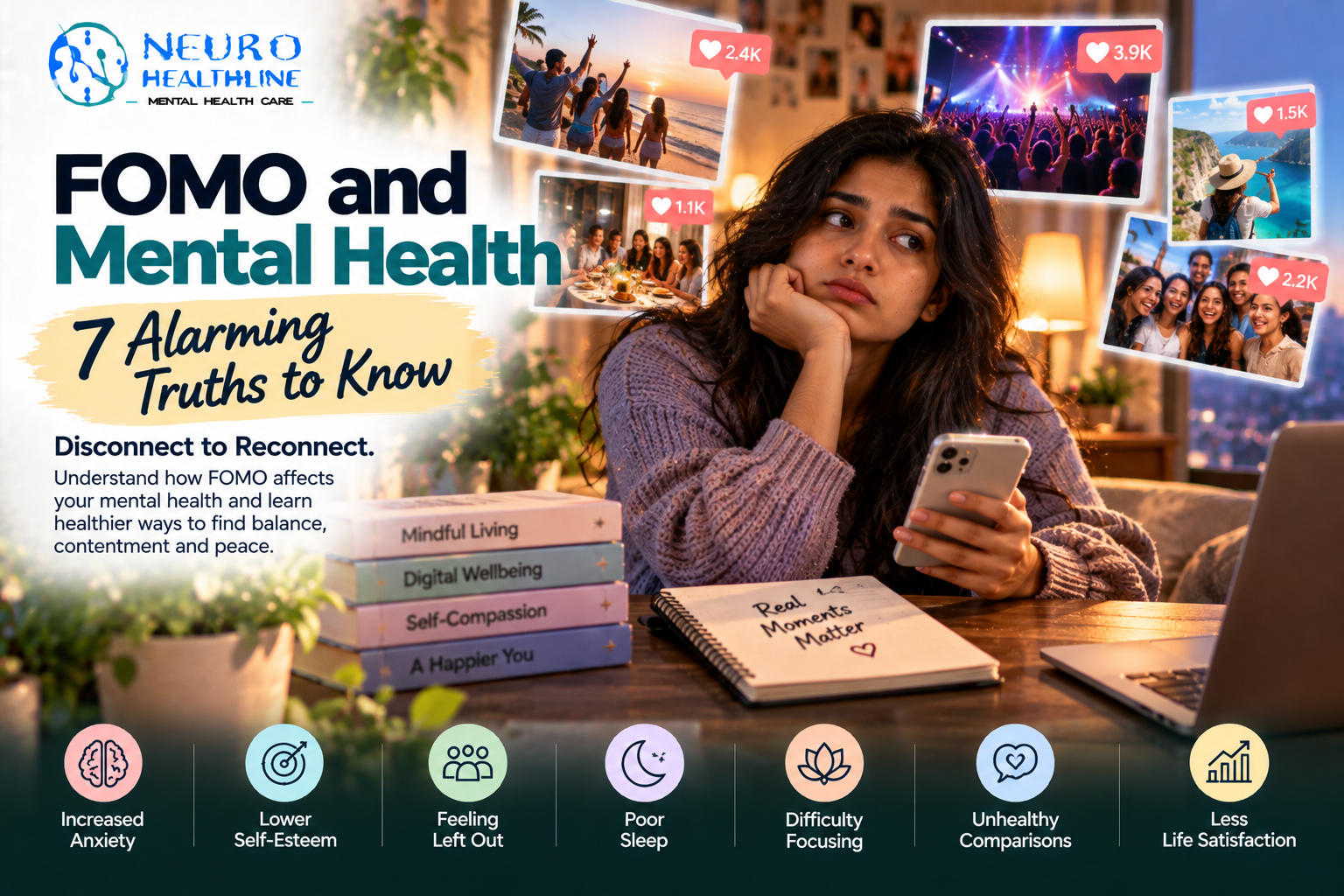
Fomo and Mental health are directly co-related. You are at home on a quiet evening, perfectly content, until you open your phone. A friend is at a rooftop dinner. A colleague is on a beach holiday. A classmate has just announced a big promotion. Within minutes, your own evening feels smaller, and a quiet worry settles in: is everyone else living a better life than me? This is the fear of missing out, or FOMO, and it has become one of the defining emotional experiences of the smartphone era. The link between FOMO and mental health is now well documented, and it affects teenagers, students, and working adults alike, including a growing number of people across Kochi and Kerala.
What FOMO Really Is
FOMO is the uneasy feeling that others are having rewarding experiences without you, along with a pull to stay constantly connected so you do not miss anything. It is not just envy. It combines social comparison, fear of exclusion, and a need to stay in the loop, and social media feeds all three at once.
Humans evolved in small groups where exclusion could threaten survival, so the brain treats social rejection as a genuine threat. Social media amplifies this by showing a continuous stream of other people’s best moments. The brain responds to this stream with the same alertness it would give to a real danger, which is why FOMO and Mental health feels physical: restless, tense, and hard to switch off.
How FOMO and Mental Health Are Connected
FOMO does not stay in the background. Studies indexed on NCBI PubMed link higher FOMO with greater anxiety, lower mood, poorer sleep, and lower life satisfaction. The relationship runs both ways. People who feel lonely, anxious, or low are more drawn to checking social media for reassurance, and the checking increases the very feelings they hoped to relieve.
The main pathways include:
- Social comparison: constant exposure to curated highlights lowers self-worth
- Compulsive checking: frequent phone checks keep the nervous system on alert
- Sleep loss: late-night scrolling delays sleep and worsens mood
- Reduced presence: attention on what others are doing weakens enjoyment of your own life
- Loneliness: online connection can leave real needs for closeness unmet
This is closely tied to what we explored in Instagram addiction and mental health and phone addiction and mental health.
7 Alarming Truths About FOMO and Mental Health
1. FOMO Keeps Your Stress System Switched On
Constant checking and comparison hold the body in mild, continuous alert. Over time, this contributes to fatigue, irritability, and anxiety.
2. It Can Fuel Depression
Persistent feelings of being left behind erode self-worth. For some, this develops into low mood that deserves clinical attention, as explored in our blog on social media and depression in teenagers.
3. It Damages Sleep
Many people stay up scrolling “just in case” they miss something. The lost sleep then lowers resilience the next day, which strengthens FOMO again.
4. It Makes Being Present Harder
FOMO pulls attention away from the person in front of you. Conversations feel thinner and enjoyment fades, even at events you wanted to attend.
5. It Drives Overcommitting and Financial Pressure
Saying yes to everything, from outings to purchases, can stretch time, energy, and money, leaving people exhausted rather than fulfilled.
6. It Can Deepen Loneliness
The more time spent watching others’ lives online, the less time is left to build real, close relationships. Our article on loneliness and mental health explains this paradox in detail.
7. It Is Treatable
FOMO is not a character flaw. It is a learned pattern of attention and emotion, and patterns can be retrained with the right support.
How to Reduce FOMO and Mental Health Problems
Small, steady changes work better than dramatic ones. Practical steps include:
- Turn off non-essential notifications and move social apps off your home screen
- Set a screen-free window before bed, ideally 60 minutes
- Curate your feed by muting accounts that leave you feeling worse
- Replace passive scrolling with one real conversation or activity each day
- Practise “JOMO”, the joy of missing out, by choosing quiet evenings on purpose
- Notice the feeling, name it, and remind yourself that feeds show highlights, not whole lives
If FOMO is affecting your sleep, mood, work, or relationships, professional support helps. At NeuroHealthline, we use HRV biofeedback therapy to calm the body’s alert response, neurofeedback to strengthen self-control, and counselling to address comparison and self-worth. Our social media addiction treatment programme supports people whose use has become compulsive, and our Gen Z mental health content speaks to the wider generational picture. The World Health Organization identifies healthy social connection and sleep as key supports for young people’s mental health, both of which FOMO undermines.