


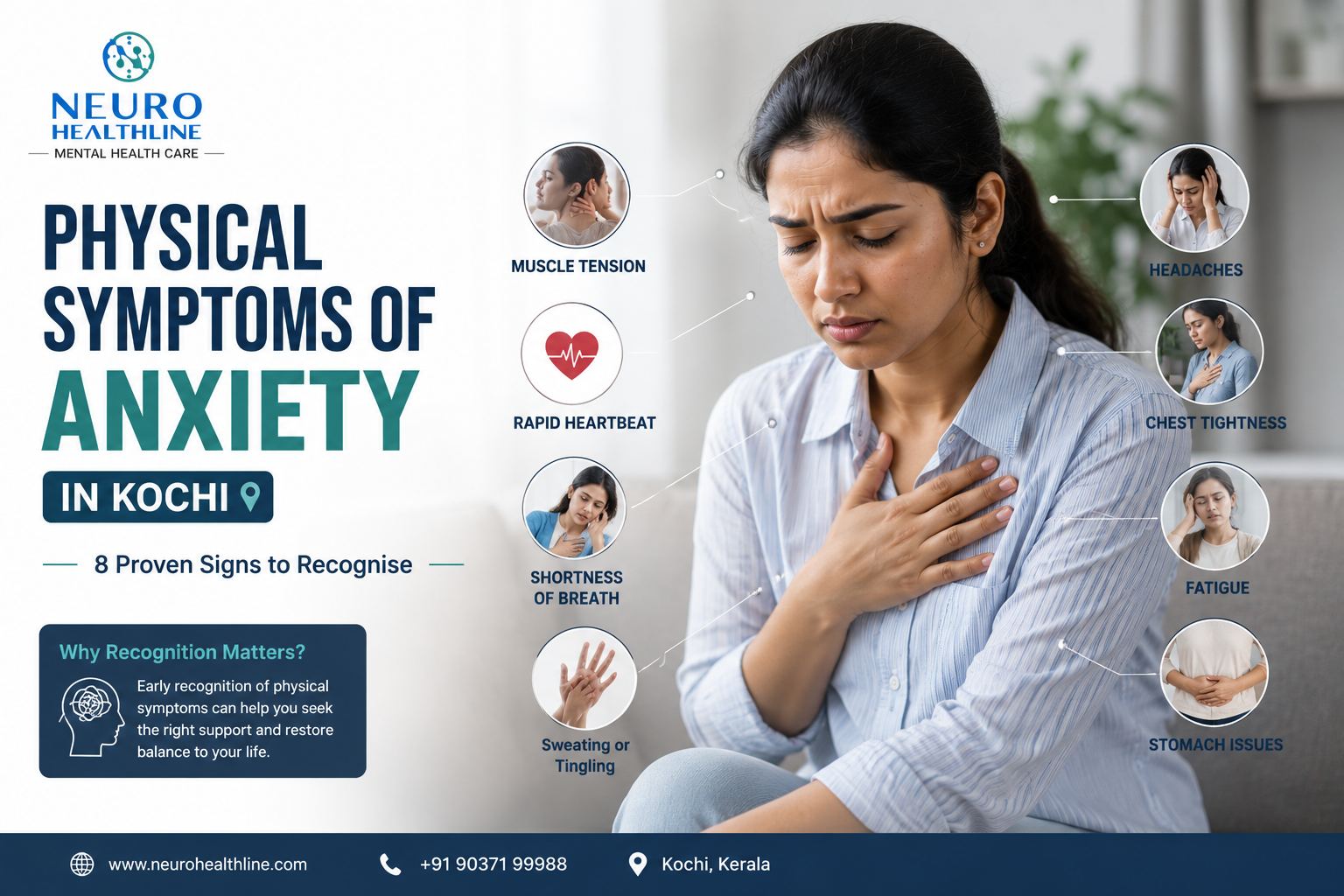
Most people associate anxiety primarily with worry, fear, and racing thoughts. What many don’t realise — until they begin experiencing them — is that anxiety produces a wide and often alarming range of physical symptoms that can feel completely disconnected from any psychological state. Physical symptoms of anxiety in Kochi are among the most commonly misunderstood presentations in clinical practice, frequently leading individuals on lengthy and frustrating journeys through medical investigations for cardiac, gastrointestinal, or neurological conditions — only to find no clear organic cause. If you have been experiencing persistent physical symptoms that your doctor cannot explain with a clear medical diagnosis, physical symptoms of anxiety in Kochi may be the missing piece of your picture. Understanding this connection is not only reassuring — it is the first step toward targeted, effective treatment that addresses the real underlying cause rather than the physical symptoms alone.
Why Anxiety Produces Physical Symptoms
To understand physical symptoms of anxiety in Kochi, it helps to understand what happens in the body when the anxiety response is activated. When the brain perceives a threat — whether real or anticipated — it activates the sympathetic nervous system, triggering a cascade of physiological changes designed to prepare the body for fight or flight. Heart rate increases to deliver more blood to the muscles. Breathing rate rises to increase oxygen supply. Muscles tense in readiness for physical action. Digestion slows as blood is redirected away from the gastrointestinal tract toward the major muscle groups. Sweat glands activate to cool an overheating body. These responses are extraordinarily useful in genuine emergencies — but when anxiety keeps the nervous system in a chronic state of partial activation, these same responses occur persistently in the absence of any real physical threat, producing a wide range of distressing physical symptoms of anxiety in Kochi that can significantly affect daily functioning, sleep, and overall health.
The longer anxiety remains unaddressed, the more entrenched these physiological patterns become, and the more diverse and persistent the physical symptoms of anxiety in Kochi can grow. This is precisely why effective treatment must address the nervous system directly rather than managing physical symptoms in isolation.
8 Proven Physical Symptoms of Anxiety in Kochi to Recognise
1. Racing or Pounding Heart (Palpitations)
One of the most alarming physical symptoms of anxiety in Kochi is a racing, pounding, or irregular heartbeat — palpitations that can occur at rest, during sleep, or without any obvious trigger. Many individuals experiencing this symptom seek cardiac investigation, and while it is always important to rule out cardiac causes, anxiety-driven palpitations are among the most common physical symptoms of anxiety in Kochi seen at NeuroHealthline.
2. Chest Tightness and Shortness of Breath
Chest tightness, a sensation of pressure or constriction in the chest, and difficulty breathing deeply are highly characteristic physical symptoms of anxiety in Kochi. These arise from the diaphragm’s response to chronic sympathetic activation — breath becomes shallow and high in the chest rather than deep and abdominal, reducing oxygen efficiency and increasing the sensation of breathlessness.
3. Headaches and Migraines
Chronic tension headaches and anxiety-triggered migraines are extremely common physical symptoms of anxiety in Kochi. Sustained muscular tension in the neck, shoulders, and scalp — maintained by chronic sympathetic nervous system activation — creates the characteristic band-like pressure of tension headaches, while disrupted serotonin regulation associated with anxiety is closely linked to migraine susceptibility.
4. Digestive Disturbances
Nausea, stomach cramping, bloating, diarrhoea, constipation, and irritable bowel symptoms are among the most frequently reported physical symptoms of anxiety in Kochi. The gut contains more neurons than the spinal cord and communicates bidirectionally with the brain — meaning chronic anxiety directly disrupts digestive function through the gut-brain axis, while gut microbiome dysregulation simultaneously worsens anxiety through its effects on serotonin and GABA production.
5. Muscle Tension and Body Aches
Persistent muscular tension — particularly in the shoulders, neck, jaw, and lower back — is one of the most physically debilitating physical symptoms of anxiety in Kochi. Many individuals experience this as chronic pain, stiffness, or achiness that does not respond well to physical treatments alone, because the underlying driver is the nervous system’s sustained activation rather than a structural musculoskeletal problem.
6. Fatigue and Low Energy
The physiological cost of maintaining a chronic partial stress response is enormous. Persistent fatigue — disproportionate to actual physical activity — is one of the most overlooked physical symptoms of anxiety in Kochi, frequently attributed to lifestyle factors or dismissed as a separate issue rather than recognised as a direct consequence of sustained nervous system overactivation.
7. Dizziness and Lightheadedness
Episodes of dizziness, lightheadedness, or a sense of unreality are common physical symptoms of anxiety in Kochi, arising from the altered breathing patterns and reduced cerebral blood flow associated with chronic sympathetic activation. These symptoms can be particularly frightening as they often suggest neurological causes — making accurate assessment essential.
8. Sweating, Trembling, and Flushing
Excessive sweating, fine trembling of the hands, and episodes of facial flushing or heat are highly characteristic physical symptoms of anxiety in Kochi, reflecting direct activation of the sympathetic nervous system’s peripheral responses. These symptoms can be particularly distressing in social or professional contexts, as they are visible to others and can intensify existing social anxiety or performance anxiety.
How Physical Symptoms of Anxiety in Kochi Affect Daily Life
The impact of physical symptoms of anxiety in Kochi extends well beyond the symptoms themselves. When physical symptoms are unrecognised as anxiety-related, individuals frequently undergo extensive and anxiety-provoking medical investigations — cardiac monitoring, gastrointestinal endoscopy, neurological imaging — each of which can intensify existing anxiety while failing to provide the treatment that would actually address the root cause. The financial and emotional cost of this diagnostic odyssey is significant, and the absence of a clear medical explanation can itself become a source of additional anxiety.
Once physical symptoms of anxiety in Kochi are correctly identified, the pathway to effective treatment becomes clear. At NeuroHealthline, our assessment process specifically maps the autonomic nervous system dysregulation and neural patterns driving your physical symptoms, ensuring treatment is targeted at the actual cause rather than the symptomatic presentations in isolation.
How NeuroHealthline Addresses Physical Symptoms of Anxiety in Kochi
NeuroHealthline’s approach to physical symptoms of anxiety in Kochi addresses the nervous system dysregulation underlying every physical symptom simultaneously rather than managing each symptom separately. HRV biofeedback therapy directly retrains the autonomic nervous system — the mechanism generating the vast majority of physical symptoms — toward a more balanced, less chronically activated state. HEG neurofeedback strengthens prefrontal regulation of the anxiety response, reducing the frequency and intensity of sympathetic activation episodes. Vibroacoustic therapy releases the chronic muscular tension responsible for headaches, body aches, and chest tightness. Functional nutrition assessment addresses the nutritional deficiencies that amplify physical anxiety symptoms — particularly magnesium, which plays a critical role in muscle relaxation, nervous system regulation, and GABA production.
Our comprehensive anxiety treatment in Kochi program integrates all of these approaches within a single, personalised treatment framework designed to resolve physical symptoms of anxiety in Kochi at their neurological and physiological root. For those whose physical symptoms occur specifically alongside low mood and fatigue, our anxiety and depression treatment program addresses the physiological overlap between both conditions simultaneously.
According to NCBI PubMed, somatic symptoms of anxiety — including cardiovascular, gastrointestinal, and musculoskeletal presentations — are among the most common reasons individuals seek primary medical care globally, yet are frequently undertreated due to misattribution to organic causes. The World Health Organization similarly emphasises the importance of recognising the physical dimensions of anxiety disorders in achieving comprehensive treatment outcomes.
Frequently Asked Questions About Physical Symptoms of Anxiety in Kochi
How do I know if my physical symptoms are caused by anxiety rather than a medical condition?
A thorough medical evaluation is always the appropriate first step to rule out organic causes. If investigations return normal results and symptoms persist, physical symptoms of anxiety in Kochi are a strong clinical possibility. Our assessment at NeuroHealthline maps the autonomic nervous system patterns underlying your physical symptoms, providing clear clinical evidence for whether anxiety is the driving cause.
Can physical symptoms of anxiety in Kochi appear without feeling anxious?
Yes. Some individuals experience significant physical symptoms of anxiety in Kochi without prominent psychological anxiety — a presentation sometimes called somatic anxiety or masked anxiety. The nervous system can generate strong physical stress responses
Will treating anxiety resolve the physical symptoms of anxiety in Kochi?
Yes. Because physical symptoms of anxiety in Kochi are driven by the underlying nervous system dysregulation rather than organic pathology, effectively treating the anxiety through nervous system regulation approaches typically resolves the physical symptoms alongside the psychological ones.
How long before physical symptoms of anxiety in Kochi improve with treatment?
Many clients report noticeable improvement in physical symptoms — particularly tension, digestive disturbance, and sleep — within the first 4 to 6 weeks of treatment, as autonomic nervous system regulation begins to improve through HRV biofeedback and neurofeedback.
Are physical symptoms of anxiety in Kochi dangerous?
While highly distressing, physical symptoms of anxiety in Kochi are not dangerous in themselves when organic causes have been ruled out. However, the chronic physiological stress they reflect does carry long-term health implications if the underlying anxiety is left unaddressed — making early, effective treatment genuinely important for long-term wellbeing.