


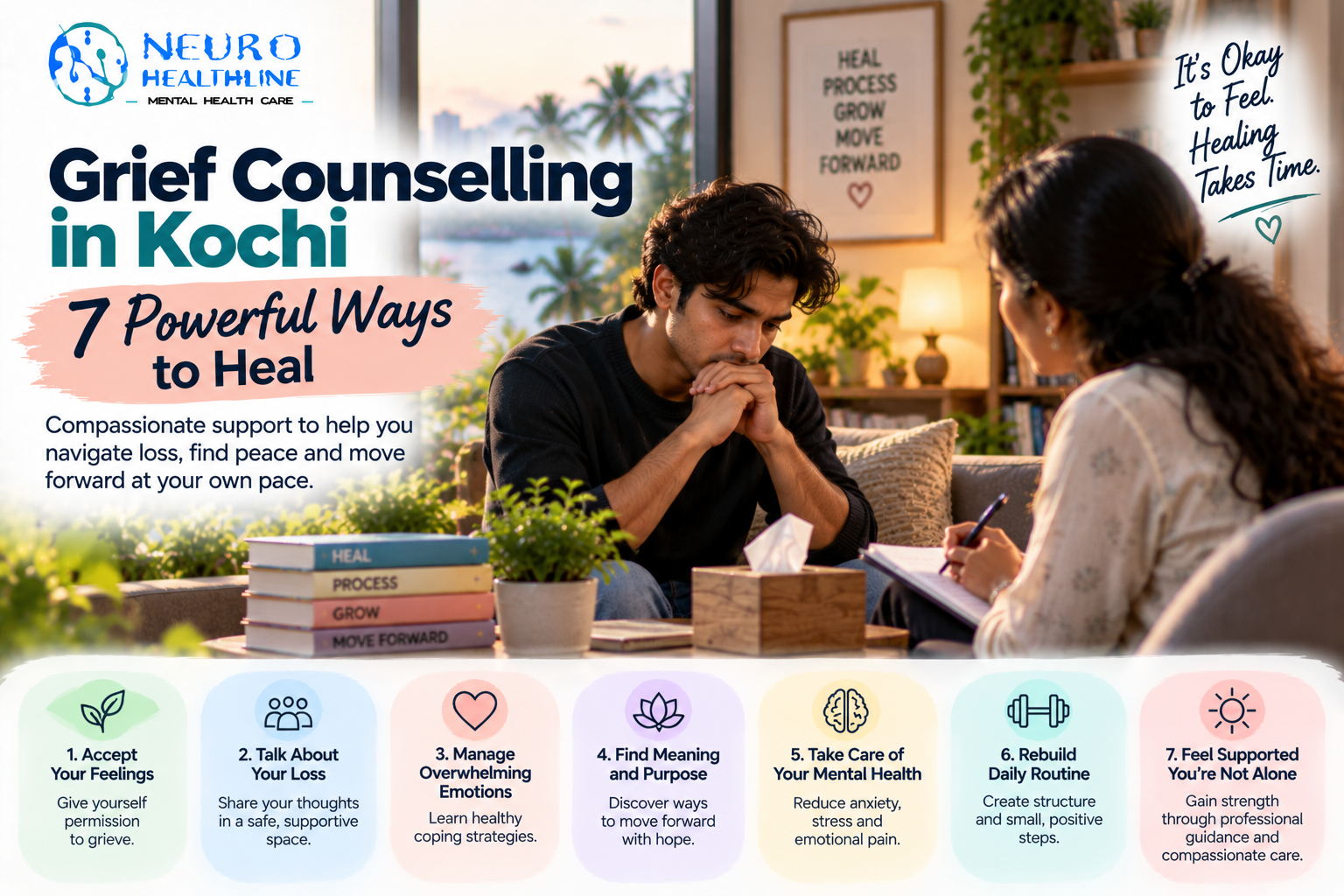
Loss does not follow a schedule. Whether it is the death of a parent, a spouse, a child, or a close friend, or the end of a relationship, a career, or a way of life, grief arrives in waves and rarely looks the way people expect. In Kerala, families gather around a loss with remarkable warmth for the first days, and then life moves on while the bereaved person is still in the middle of it. Many are told to be strong, to keep busy, or to think of those who depend on them. Grief counselling in Kochi at NeuroHealthline offers something different: a calm, unhurried space where grief is treated as a natural response that deserves support, not something to be hidden or hurried.
What Grief Really Is, in the Mind and the Body
Grief is not only sadness. It can bring exhaustion, confusion, anger, guilt, numbness, forgetfulness, aching in the chest, disrupted sleep, and a sense of unreality. These are not signs of weakness. Loss activates the brain’s attachment and threat systems at once, because the brain has built its sense of safety around the person or life that is now gone. The body responds with stress hormones, disrupted sleep, and a nervous system that stays on high alert.
Grief is also not a neat sequence of stages. Most people move back and forth between sadness, anger, acceptance, and longing, sometimes within a single day. Anniversaries, festivals, songs, and places can bring the pain back sharply months or years later. Grief counselling in Kochi helps people understand that this is normal, which is often a relief in itself.
When Grief Needs More Support
Most grief eases gradually with time and support. Sometimes it becomes stuck or overwhelming. Consider grief counselling in Kochi if you notice:
- Intense longing or distress that is not softening after many months
- Persistent inability to carry out daily responsibilities
- Severe guilt, self-blame, or feeling that life has no meaning
- Withdrawal from family and friends
- Ongoing insomnia or nightmares after the loss
- Heavy reliance on alcohol or other substances to cope
- Symptoms of depression or trauma, especially after a sudden or violent loss
If you ever have thoughts of ending your life, please speak to a doctor, a trusted person, or a local emergency service immediately. You deserve care, and you do not have to carry this alone.
When grief overlaps with clinical depression or trauma, our depression treatment in Kochi and PTSD treatment in Kochi programmes provide the additional support needed.
How Grief Affects Sleep, Health, and Relationships
Grief often disrupts sleep first. Many bereaved people lie awake with racing thoughts or wake in the early hours with a heavy sense of loss. Poor sleep then worsens mood, concentration, and the ability to cope, which can deepen grief. Our sleep therapy in Kochi programme can be combined with grief counselling when sleep has been badly affected.
Grief can also strain relationships. Family members grieve differently, and one person’s silence may be misread as not caring while another’s tears are misread as weakness. Loneliness is common, even when surrounded by people, and our article on loneliness and mental health explains why feeling disconnected after loss is so common and so important to address. According to NCBI PubMed, bereavement is linked to higher rates of sleep problems, depression, and stress-related health issues, which is why timely support matters.
7 Powerful Ways Grief Counselling in Kochi Helps You Heal
1. A Safe Space to Speak Honestly
You can say what you cannot say elsewhere, including anger, relief, guilt, or numbness, without being corrected or hurried.
2. Understanding Your Grief
We explain what is happening in your mind and body so that your reactions feel less frightening and more human.
3. Calming the Nervous System
HRV biofeedback therapy helps settle the constant alertness and physical tension that grief creates, giving you moments of real rest.
4. Working Through Guilt and Unfinished Business
Many people carry “if only” thoughts. We help you look at them gently and make peace with what could not be changed or said.
5. Honouring the Relationship
Healing does not mean forgetting. We help you find ways to carry the person’s memory, values, and love into your life going forward.
6. Restoring Sleep, Energy, and Daily Routine
We support sleep, nutrition, and small, manageable routines so your body has the strength to grieve.
7. Rebuilding Meaning and Connection
Over time, we help you reconnect with people, activities, and purpose, at a pace that feels right for you.
Why NeuroHealthline for Grief Counselling in Kochi
At NeuroHealthline, grief counselling in Kochi is delivered with patience, privacy, and respect for your faith, family, and cultural traditions. There is no timetable for grief and no pressure to feel better by a certain date. We combine compassionate counselling with calming, evidence-based tools, so support reaches both the heart and the body.
To learn more about how we work, visit our counseling centers in Kochi page. The World Health Organization highlights access to psychosocial support as an essential part of mental health care, and grief counselling in Kochi is part of that care.
FAQ — Grief Counselling in Kochi
How long does grief last?
There is no fixed timeline. Intense grief usually softens gradually, but waves can return for years. What matters is whether you can function and feel supported.
Is grief counselling in Kochi only for death?
No. We also support grief after separation, divorce, job loss, miscarriage, serious illness, or major life change.
Should I wait before starting grief counselling?
You can begin whenever you feel ready. Some people want support immediately, while others come months later. Both are valid.
Can children and teenagers receive grief support?
Yes. We offer age-appropriate support for young people, along with guidance for parents on how to talk about loss.
What if I cannot cry or feel anything?
Numbness is a common protective response. There is no right way to grieve, and counselling can help at your own pace.