


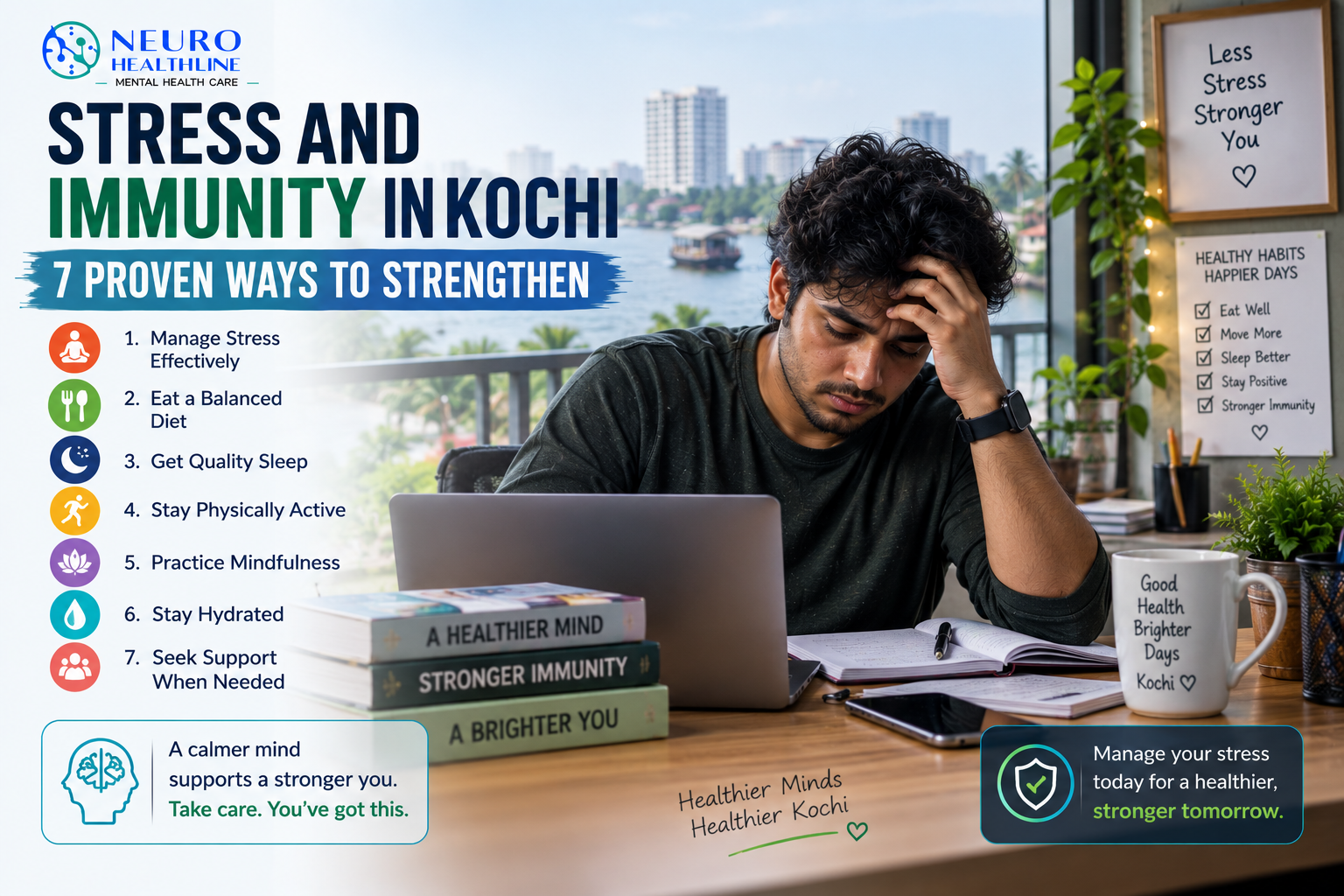
If you are the person in your office who catches every seasonal illness, finds it impossible to shake infections that colleagues recover from quickly, experiences frequent cold sores, recurring skin flares, or persistent low-grade fatigue that never quite resolves — chronic stress may be quietly dismantling your immune system from the inside. Stress and immunity in Kochi is a critically underappreciated clinical relationship in a city where professional demands, urban lifestyle pressures, and the Karnataka-adjacent seasonal weather patterns create a particularly significant convergence of immune vulnerability and chronic stress burden. Most people understand that stress makes them feel worse — fewer understand that sustained chronic stress produces measurable, clinically significant suppression of the immune system’s capacity to defend against infection, regulate inflammation, and maintain the immune surveillance that protects long-term health. At NeuroHealthline, stress and immunity in Kochi are addressed as the inseparable physiological partnership they are — through a comprehensive functional medicine and neuroscience-based program that identifies and corrects the specific immune dysregulations your stress pattern has produced.
How Stress Destroys Immunity — The Physiological Mechanism
The relationship between stress and immunity in Kochi begins with cortisol — the body’s primary stress hormone, produced by the adrenal glands in response to HPA axis activation. In the short term, cortisol modulates immune function adaptively — temporarily suppressing inflammatory responses that would otherwise impair the physical performance required to respond to acute threat. This short-term cortisol-immune relationship is protective and functional. The problem emerges with chronic stress — when cortisol remains persistently elevated, immune cells become progressively less sensitive to cortisol’s regulatory signals through a process called glucocorticoid resistance. The result is a paradox: sustained cortisol elevation that was intended to suppress inflammation instead loses its anti-inflammatory regulatory capacity — producing the chronic, dysregulated inflammation that underlies a wide range of stress-associated immune conditions.
Simultaneously, chronic stress directly reduces the production and function of natural killer cells — the immune system’s primary defence against viral infection and tumour surveillance; suppresses secretory IgA — the mucosal immune defence that represents the body’s first line of protection against respiratory and gastrointestinal pathogens; impairs the proliferative response of T lymphocytes — the adaptive immune cells that generate targeted responses to specific pathogens; and disrupts the cytokine communication network that coordinates immune responses across the body’s different immune compartments. According to NCBI PubMed, chronic psychological stress is one of the most extensively documented causes of immune suppression and immune dysregulation in human clinical research — with the relationship being dose-dependent, bidirectional, and mediated through multiple simultaneous neuroimmunological pathways.
Signs That Stress Is Suppressing Your Immunity in Kochi
Many professionals in Kochi are experiencing the immune consequences of chronic stress without recognising the stress as the underlying cause. Common signs that stress and immunity in Kochi are clinically connected in your specific presentation include frequent minor infections — recurring colds, recurrent respiratory infections, or persistent viral illnesses that take longer than expected to resolve and return more frequently than they should; frequent cold sore outbreaks — HSV-1 reactivation is one of the most sensitive clinical indicators of stress-driven immune suppression; skin conditions including psoriasis, eczema, or acne that reliably worsen during periods of elevated stress — reflecting both the inflammatory dysregulation and the gut microbiome disruption that stress produces; slow wound healing — a direct consequence of the impaired immune surveillance and inflammatory resolution that cortisol dysregulation produces; chronic low-grade fatigue that is disproportionate to physical activity and does not improve with rest — reflecting the metabolic cost of both chronic stress and the dysregulated inflammatory activity it produces; and the reactivation of latent infections — including EBV and other latent viral infections that a competent immune system maintains in dormancy — during periods of particularly intense sustained stress.
Stress, Inflammation, and Long-Term Health in Kochi
The relationship between stress and immunity in Kochi extends beyond the immediate vulnerability to infections and into the long-term inflammatory consequences that chronic stress produces. The glucocorticoid resistance that sustained cortisol elevation generates produces a state of chronic, low-grade systemic inflammation — measurable through elevated C-reactive protein, interleukin-6, and tumour necrosis factor levels — that is one of the most significant drivers of the chronic disease conditions most prevalent in Kochi’s stressed professional population. Cardiovascular disease, type 2 diabetes, metabolic syndrome, autoimmune conditions, and neurodegenerative disorders all involve chronic inflammation as a central pathophysiological mechanism — and chronic stress, through its capacity to produce persistent immune dysregulation, is one of the most powerful modifiable drivers of the inflammatory burden underlying each of these conditions.
For Kochi’s professionals, this means that the consequences of untreated chronic stress and its immune consequences extend far beyond frequent winter colds — they accumulate progressively into the chronic disease burden that defines the long-term health trajectory of the city’s working population. Addressing stress and immunity in Kochi proactively is therefore not simply a quality of life intervention — it is a genuine preventive medicine priority that directly reduces the risk of the most consequential long-term health outcomes.
7 Proven Solutions for Stress and Immunity in Kochi
1. Integrated Stress and Immune Assessment
Treatment for stress and immunity in Kochi begins with a comprehensive assessment mapping both the stress physiology — HPA axis function, cortisol rhythm, HRV — and the immune status — inflammatory markers, mucosal IgA, nutritional immune cofactors — simultaneously. This dual assessment provides the clinical foundation for genuinely targeted treatment rather than generic immune support advice.
2. HPA Axis Regulation Through HRV Biofeedback
Since the HPA axis cortisol dysregulation is the primary mechanism through which stress suppresses immunity, HRV biofeedback therapy — which directly retrains the autonomic nervous system to reduce chronic HPA axis activation — is the foundational intervention for stress and immunity in Kochi. As cortisol patterns normalise through sustained HRV biofeedback training, immune cell function progressively restores and the chronic inflammatory burden produced by glucocorticoid resistance progressively reduces.
3. Anti-Inflammatory Functional Nutrition
Stress and immunity in Kochi treatment at NeuroHealthline includes a comprehensive functional nutrition assessment and protocol targeting the specific nutritional deficiencies that most critically impair stress-driven immune dysfunction. Key nutritional interventions include vitamin D — one of the most important immune modulators and one of the most commonly deficient nutrients among Kochi’s indoor professional population; omega-3 fatty acids for resolution of chronic inflammation; vitamin C for immune cell function and cortisol regulation; zinc for T cell function and mucosal immunity; and magnesium for HPA axis regulation and nervous system stability.
4. Gut Microbiome Restoration for Immune Balance
Approximately 70% of the body’s immune tissue is located in and around the gastrointestinal tract — making gut microbiome health one of the most direct determinants of immune system function. Stress and immunity in Kochi treatment includes targeted gut microbiome assessment and restoration — using clinically assessed probiotic protocols and prebiotic dietary support to rebuild the beneficial bacterial populations that chronic stress has depleted, restoring the gut-associated immune tissue to optimal functional capacity.
5. Sleep Restoration for Immune Recovery
Sleep is one of the most important immune regulation mechanisms available to the stressed body — with the cytokine production and immune memory consolidation that occur during deep sleep representing critical immune restoration processes that chronic stress-driven sleep disruption systematically prevents. Our treatment for stress and immunity in Kochi includes comprehensive sleep restoration through circadian realignment, HRV biofeedback pre-sleep protocols, and CES-supported sleep architecture improvement — directly restoring the immune recovery capacity that adequate deep sleep provides.
6. HEG Neurofeedback for Stress System Downregulation
By directly reducing the neural stress response that drives HPA axis activation and cortisol elevation, HEG neurofeedback produces downstream benefits for immune function — reducing the cortisol burden on immune cell regulation, decreasing the inflammatory dysregulation produced by glucocorticoid resistance, and restoring the nervous system balance that optimal immune surveillance requires. This top-down neural approach to stress and immunity in Kochi treatment works synergistically with the bottom-up functional nutrition and gut health interventions to produce comprehensive immune system restoration.
7. Adaptogenic and Lifestyle Protocol
Stress and immunity in Kochi treatment at NeuroHealthline includes evidence-based adaptogenic support — using clinically validated adaptogenic nutrients including ashwagandha, rhodiola, and eleuthero to support HPA axis regulation and immune resilience — alongside structured lifestyle interventions including physical activity timing, circadian light exposure management, and strategic recovery practices that directly reduce the immunosuppressive burden of sustained occupational stress. Our broader stress treatment in Kochi program provides the comprehensive clinical framework within which stress and immunity treatment sits — recognising that immune restoration without stress system restoration is a temporary intervention at best.
Why Choose NeuroHealthline for Stress and Immunity in Kochi?
NeuroHealthline’s approach to stress and immunity in Kochi addresses the full neurological, physiological, and nutritional complexity of stress-driven immune dysregulation — rather than offering generic immune supplements or stress management advice that fails to engage with the clinical depth of a presentation driven by genuine HPA axis dysfunction and neuroimmunological dysregulation. Our occupational stress treatment and chronic stress treatment programs address the specific stress contexts most commonly driving immune suppression in Kochi’s professional population, while our stress and gut health and stress and hormones programs address the gut and hormonal dimensions of stress-driven health deterioration that co-occur with immune dysfunction in the majority of chronically stressed clients. The World Health Organization recognises the systemic, whole-body consequences of chronic psychological stress — and NeuroHealthline’s stress and immunity in Kochi program reflects this recognition in its clinically comprehensive, neurologically grounded design.
FAQ — Stress and Immunity in Kochi
Can chronic stress permanently damage the immune system?
Chronic stress produces neuroplastic changes in immune regulation rather than permanent structural damage — meaning the immune dysfunction it causes is fully reversible with appropriate clinical intervention. The immune system’s remarkable adaptability is the biological foundation of stress and immunity treatment in Kochi.
How quickly does immune function improve when stress is treated?
Most clients report noticeable improvements in infection frequency and recovery time within 6 to 12 weeks of beginning treatment, with more comprehensive inflammatory normalisation and immune regulation restoration typically consolidating over 3 to 6 months.
Can stress cause autoimmune conditions?
Stress is a significant trigger and amplifier of autoimmune conditions — through its effects on immune regulation, gut barrier integrity, and inflammatory cytokine production. Addressing stress and immunity in Kochi is therefore particularly important for individuals with existing or family history of autoimmune conditions.
Is immune support through nutrition alone sufficient for stress-driven immune suppression?
Nutritional immune support is an important component but insufficient alone — because the primary driver of stress-driven immune suppression is the HPA axis and autonomic nervous system dysregulation that produces cortisol excess and glucocorticoid resistance. Addressing these neurological root causes is essential for comprehensive stress and immunity recovery.
Can stress and immunity treatment in Kochi help with frequent respiratory infections?
Yes. Frequent respiratory infections are among the most common presentations of stress-driven immune suppression — reflecting reduced mucosal IgA and impaired innate immune function. Our integrated treatment program directly addresses the immune mechanisms underlying respiratory vulnerability.