


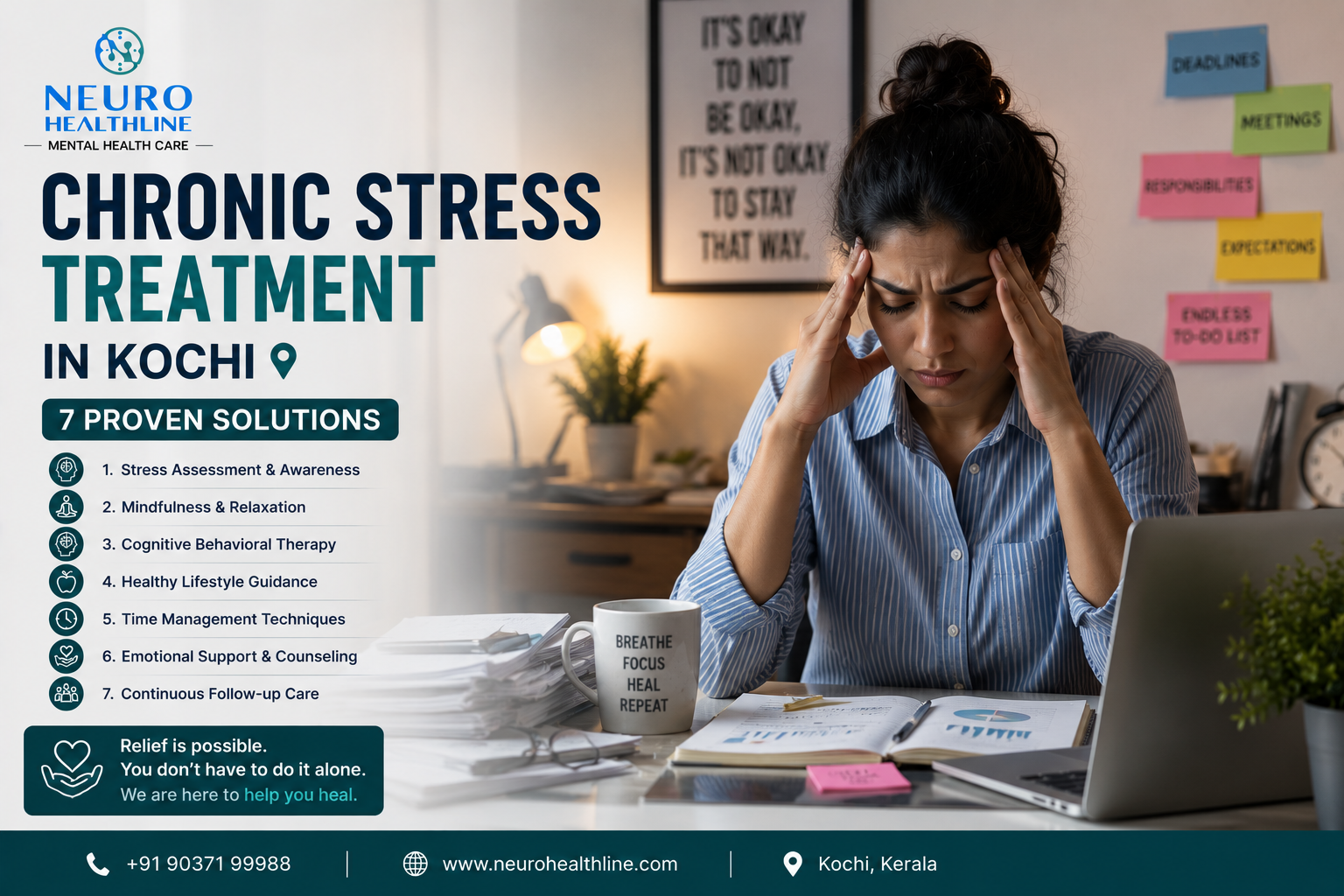
There is a significant and clinically important difference between the ordinary stress that comes and goes with life’s demands and the chronic, unrelenting stress that never fully resolves — that persists as a background physiological state regardless of what is happening externally, gradually wearing down the body’s systems, depleting its reserves, and reshaping the brain’s threat-detection architecture in ways that make everything feel harder, more dangerous, and less manageable. Chronic stress treatment in Kochi at NeuroHealthline is designed specifically for this second, far more serious condition — the kind of stress that has stopped being a response to specific demands and has become the body’s default operating state. If you have been feeling persistently exhausted, overwhelmed, physically unwell, and unable to switch off despite having every reason to feel that things should be manageable, chronic stress treatment in Kochi may be exactly what your brain and body need.
What Makes Stress Chronic? The Neuroscience of a Stuck Nervous System
Stress is a normal and necessary physiological response — the body’s way of mobilising energy and attention to meet demands. The problem is not stress itself but the failure of the stress response to deactivate once the demand has passed. In chronic stress, the hypothalamic-pituitary-adrenal axis — the brain-body system responsible for regulating the stress response — becomes dysregulated through sustained activation, losing its capacity to return cortisol and sympathetic nervous system activity to baseline after stressful events. The nervous system effectively gets stuck in a partially activated state, treating the absence of acute threat as no reason to stand down from a condition of persistent low-level alert.
This physiological reality is why chronic stress treatment in Kochi must directly address the HPA axis and autonomic nervous system — not simply reduce the external demands being placed on an individual. Research published on NCBI PubMed confirms that chronic stress produces measurable structural changes in the brain — including hippocampal volume reduction, amygdala hyperreactivity, and prefrontal cortex thinning — changes that directly impair memory, emotional regulation, and cognitive performance. These are not metaphorical consequences of feeling stressed — they are genuine neurological changes that require neurologically targeted chronic stress treatment in Kochi to reverse.
Recognising Chronic Stress — Signs That Indicate You Need Treatment
Many people living with chronic stress have normalised their experience to such a degree that they no longer recognise it as a clinical condition requiring treatment — attributing their symptoms to being busy, getting older, or simply the demands of life in Kochi’s competitive professional environment. Common signs that indicate a genuine need for chronic stress treatment in Kochi include persistent fatigue that does not improve with rest or sleep; difficulty switching off mentally — a constant background of worry, planning, or threat-monitoring even during leisure time; physical symptoms including chronic tension headaches, jaw clenching, digestive disturbances, frequent illness, and skin problems — reflecting the immune dysregulation chronic stress produces; emotional symptoms including irritability, emotional flatness, reduced patience, and a progressive loss of joy or enthusiasm; cognitive symptoms including difficulty concentrating, memory difficulties, and reduced decision-making capacity; sleep difficulties — particularly waking in the early hours with a racing mind; and a persistent sense of being overwhelmed and behind regardless of how much is accomplished.
If several of these describe your daily experience, chronic stress treatment in Kochi at NeuroHealthline is specifically designed to address the neurological and physiological state you are in — not simply the circumstances creating it.
Who Is Most at Risk of Chronic Stress in Kochi?
Chronic stress in Kochi does not discriminate by profession, age, or background — but certain populations carry disproportionately high risk given the specific demands of their environments. Kochi’s IT and technology sector workers navigating deadline-driven, high-accountability workloads with minimal genuine recovery time between demands; healthcare professionals carrying the cumulative weight of patient care, clinical responsibility, and institutional pressure across long shifts; entrepreneurs and business owners managing the financial, operational, and personnel demands of a rapidly evolving commercial environment; parents balancing career demands with family responsibilities in a city where both spheres have intensified simultaneously; and students in Kerala’s extraordinarily competitive academic environment — all represent populations for whom chronic stress treatment in Kochi is a particularly relevant and genuinely urgent clinical priority.
The burnout treatment in Kochi program we offer addresses the advanced stage of chronic stress that burnout represents — but for those whose chronic stress has not yet progressed to full burnout, proactive chronic stress treatment in Kochi is the most powerful intervention available for preventing that progression.
7 Proven Solutions in Our Chronic Stress Treatment in Kochi Program
1. HPA Axis and Autonomic Nervous System Assessment
Chronic stress treatment in Kochi begins with a comprehensive assessment of each individual’s HPA axis function and autonomic nervous system profile — including HRV analysis, cortisol rhythm mapping, and QEEG brain mapping — to precisely characterise the specific pattern of dysregulation driving their chronic stress presentation. This data-driven foundation ensures every subsequent intervention is targeted rather than generic.
2. HRV Biofeedback for Nervous System Recalibration
HRV biofeedback therapy is the cornerstone of chronic stress treatment in Kochi — directly retraining the autonomic nervous system to shift out of chronic sympathetic dominance and recover genuine parasympathetic regulatory capacity. Over successive sessions, this builds a measurable, lasting improvement in the nervous system’s ability to genuinely deactivate after stress exposure rather than remaining partially activated indefinitely.
3. HEG Neurofeedback for Prefrontal Restoration
Chronic stress progressively impairs prefrontal cortex function — reducing the cognitive clarity, decision-making capacity, and emotional regulation that the prefrontal cortex provides. HEG neurofeedback directly restores prefrontal activation, reversing this stress-induced neural impairment and rebuilding the cognitive and emotional regulatory capacity that chronic stress has eroded over time.
4. Cortisol and Hormonal Regulation
Chronic stress treatment in Kochi at NeuroHealthline includes functional assessment of cortisol rhythm, adrenal function, thyroid status, and sex hormone balance — all of which are measurably affected by sustained chronic stress. Targeted functional medicine protocols correct these hormonal dysregulations, restoring the physiological foundation that the stress response has depleted.
5. Functional Nutrition for Stress System Recovery
Chronic stress depletes specific nutritional reserves — particularly magnesium, B vitamins, vitamin C, zinc, and omega-3 fatty acids — that are essential for HPA axis regulation and nervous system function. Chronic stress treatment in Kochi includes a comprehensive functional nutrition assessment identifying and correcting these deficiencies, restoring the nutritional substrate required for genuine physiological stress recovery.
6. Vibroacoustic Therapy for Somatic Stress Release
Chronic stress stores significant physiological tension in the body — in the musculature, the fascia, and the diaphragm — that persists even when external demands temporarily reduce. Vibroacoustic therapy delivers low-frequency sound vibrations that directly release this held somatic tension, activating the parasympathetic nervous system and creating the genuine physiological rest state that chronic stress makes so difficult to access through cognitive effort alone. This is one of the most immediately tangible components of chronic stress treatment in Kochi for clients whose stress is strongly somatically held.
7. Neuropsychotherapy for Sustainable Stress Management
Chronic stress is maintained not only by physiological dysregulation but by the cognitive patterns, relational dynamics, and lifestyle structures that keep the stress response chronically activated. Our neuropsychotherapy approach to chronic stress treatment in Kochi addresses these dimensions — helping clients identify the specific patterns maintaining their chronic stress, develop more adaptive responses to inevitable demands, and restructure the lifestyle elements within their control in ways that create genuine recovery capacity rather than temporary relief.
Why Chronic Stress Treatment in Kochi Cannot Wait
The consequences of untreated chronic stress extend well beyond how someone feels on a daily basis — they accumulate progressively into serious health outcomes. Chronic stress is one of the most significant modifiable risk factors for cardiovascular disease, type 2 diabetes, immune dysfunction, and neurodegenerative conditions — conditions whose roots are frequently traceable to years of unaddressed physiological stress dysregulation. In the brain specifically, the hippocampal volume reduction and prefrontal thinning associated with chronic stress directly increase vulnerability to depression, anxiety, and cognitive decline — creating the neurological foundation for the mental health conditions that so commonly emerge from sustained stress.
Our comprehensive stress treatment in Kochi program provides the full clinical framework within which chronic stress treatment sits — addressing the complete spectrum of stress-related presentations from acute stress through to chronic stress and burnout. For those whose chronic stress is occurring in a specifically occupational context, our corporate wellness programs in Kochi address chronic stress at both an individual and organisational level — recognising that sustainable chronic stress treatment in Kochi for working professionals requires attention to both the individual nervous system and the workplace environment creating the demand. The World Health Organization identifies chronic stress as one of the most significant contributors to global mental and physical health burden — and NeuroHealthline’s chronic stress treatment in Kochi is built to meet this burden with the clinical depth it genuinely requires.
Your nervous system was not designed to run on high alert indefinitely. Contact NeuroHealthline in Kochi today to book your comprehensive stress assessment and begin a personalised chronic stress treatment program built around your brain’s specific needs.
Frequently Asked Questions About Chronic Stress Treatment in Kochi
How do I know if I have chronic stress rather than normal everyday stress?
The defining characteristic of chronic stress — as opposed to normal situational stress — is its persistence. Normal stress resolves when the stressor resolves. Chronic stress persists as a physiological state regardless of external circumstances, and is accompanied by the physical, cognitive, and emotional symptoms described above. If your stress feels like a permanent background condition rather than a response to specific demands, chronic stress treatment in Kochi is appropriate.
How long does chronic stress treatment in Kochi typically take?
Most clients undergoing chronic stress treatment in Kochi report meaningful improvements in nervous system regulation and physical symptoms within 4 to 8 weeks. More comprehensive HPA axis restoration and neurological recovery typically consolidates over 3 to 6 months depending on the duration and severity of the chronic stress presentation.
Can chronic stress treatment in Kochi help if my stress is caused by unchangeable circumstances?
Yes. While addressing external stressors where possible is always beneficial, chronic stress treatment in Kochi specifically targets the physiological dysregulation maintaining the chronic stress state — meaning meaningful improvement is achievable even when the external circumstances generating stress cannot be completely changed.
Is chronic stress treatment in Kochi suitable for busy professionals who cannot take time off work?
Yes. Sessions are scheduled flexibly to accommodate working professionals, and many clients find that early improvements in nervous system regulation produce tangible benefits in workplace performance and stress tolerance that make the treatment investment immediately practical as well as clinically valuable.
What is the difference between chronic stress treatment in Kochi and burnout treatment?
Chronic stress is the sustained physiological state that, without effective intervention, progresses to burnout — the more severe stage characterised by complete physiological depletion and emotional exhaustion. Chronic stress treatment in Kochi addresses the condition at an earlier stage, with the preventive goal of restoring regulatory capacity before depletion becomes comprehensive